The float test of bitumen is used for measuring the consistency or ability of bitumen to flow.
The consistency of bitumen is measured by penetration test and viscosity test. For bituminous materials with higher viscosity, these tests are not applicable. Instead, float test is conducted.
To perform the float test, bitumen should first be heated to be completely liquid. Then it is poured into a mould assembly and float in a water bath at a temperature of 5 °C. Then it is submerged in a water bath at 50 °C. The time that takes the water to flow through the sample mould is recorded as float time.

Why is it Important to Perform a Float Test on Bitumen?
The consistency of bitumen is an important property in road construction. A proper consistency causes a uniform and stable asphalt without cracking on it.
Standard Methods for Measuring Float Test of Bitumen
Standard methods are provided to determine the float test of bitumen, as follows:
- ASTM D139
- IS 1210
In the following, the float test of bitumen based on IS 1210 will be described:
Float Test of Bitumen Based on IS 1210
– The component of the apparatus
- Alumina Float
- Brass Collar
- Thermometer
- Water bath
- Stopwatch
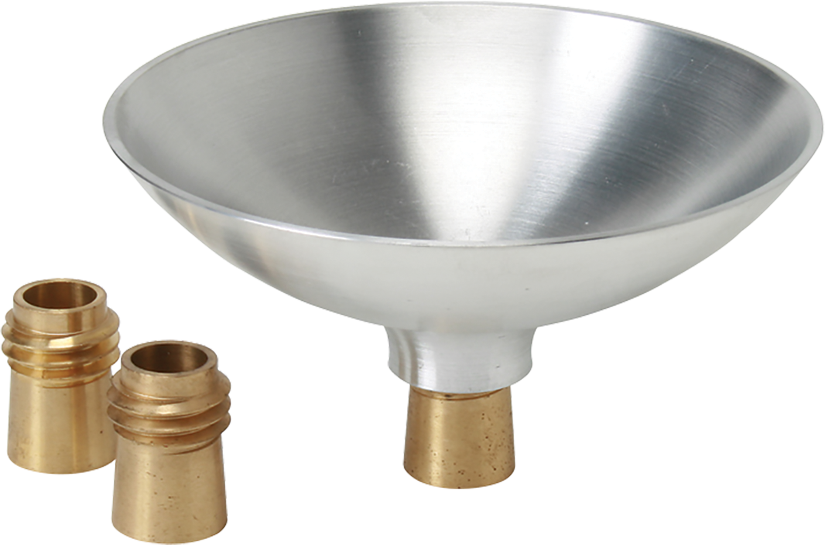
– Procedure
a) Sample preparation
- Coat the brass plate with an equal value of glycerin and dextrin.
- Put the collar from the small end on the brass plate.
- Heat the bitumen until it becomes completely liquid. Do not overheat the specimen. Because its properties are changed due to evaporation. The lowest temperature at which the bitumen becomes liquid is suitable.
- Pour the melted sample into the collar. Be sure there is a little extra material on the collar.
- Place the tar bitumen immediately in the water bath at 5 °C for 5 minutes. But for refined bitumen and its products, let them cool at room temperature. Then place it in a water bath at a temperature of 5 ° C for 5 minutes.
- Cut the excess bitumen from the top of the collar. Then place the assembly in the water bath again. It should remain there about 15 to 30 minutes.
b) Test
Warm the water bath until the temperature reaches 50 °C and maintain it. Check the temperature with the thermometer placed in the water bath.
Remove the collar from the brass plate. Then screw the collar to the alumina float.
Immerse the assembly in a water bath of 5 °C for 1 minute. Remove the water inside the float.
After that, place the assembly in the water bath at 50 °C.
Record the time until the moment that water breaks through the material. This time is the float value.